Straight answers to the questions travellers actually ask about borobudur tour from in Bali. Everything here is information, not licensed advice; for bookings we introduce you to vetted local partners. Have a question that is not covered? Ask us directly.
Can you do a Borobudur tour from Bali in one day?
Yes, a Borobudur day trip from Bali is possible by flying Denpasar to Yogyakarta (about 1h15m), then driving roughly 1.5 hours to the temple. Realistically you get only 5-7 useable hours on the ground and miss sunrise, so most travelers prefer a 2-day overnight trip. Bali Premium Trip arranges flights, transfers and guides. Read more.
How long does it take to get from Bali to Borobudur?
Flying is fastest: a Denpasar (DPS) to Yogyakarta (YIA/JOG) flight is about 1 hour 15 minutes, then Borobudur is roughly a 1-1.5 hour drive from the airport. Door-to-door is typically 4-5 hours including check-in and transfers. Overland by bus, ferry and train takes 18+ hours and is impractical for a tour. Read more.
Can you still climb to the top of Borobudur in 2026?
Yes. Climbing the upper terraces is allowed but requires a separate climb-up ticket with a strict daily quota and an assigned time slot. Visitors must wear provided Upanat sandals and are usually accompanied by a licensed guide. Because slots sell out, book the climb ticket several days ahead through your tour operator. Read more.
Can you watch the sunrise from inside Borobudur temple?
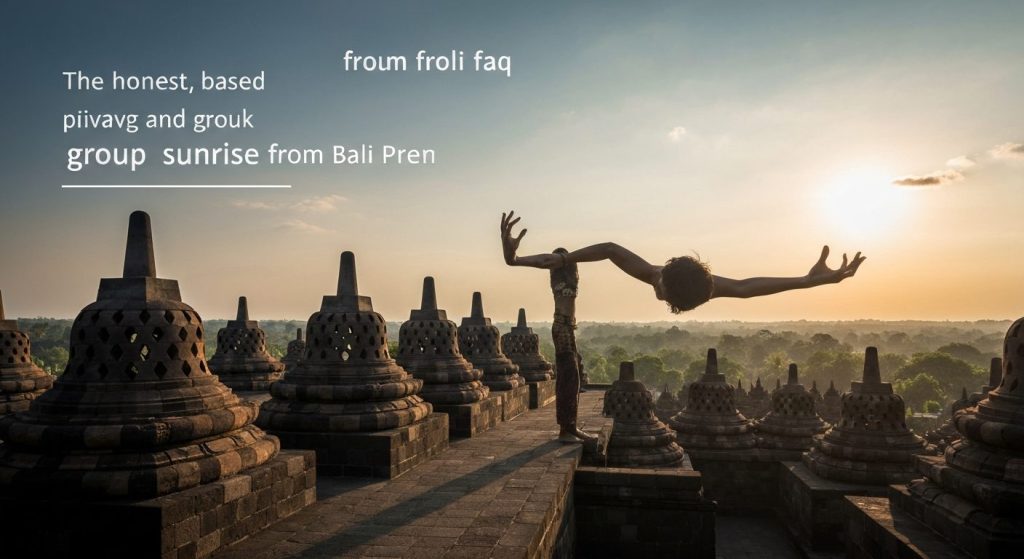
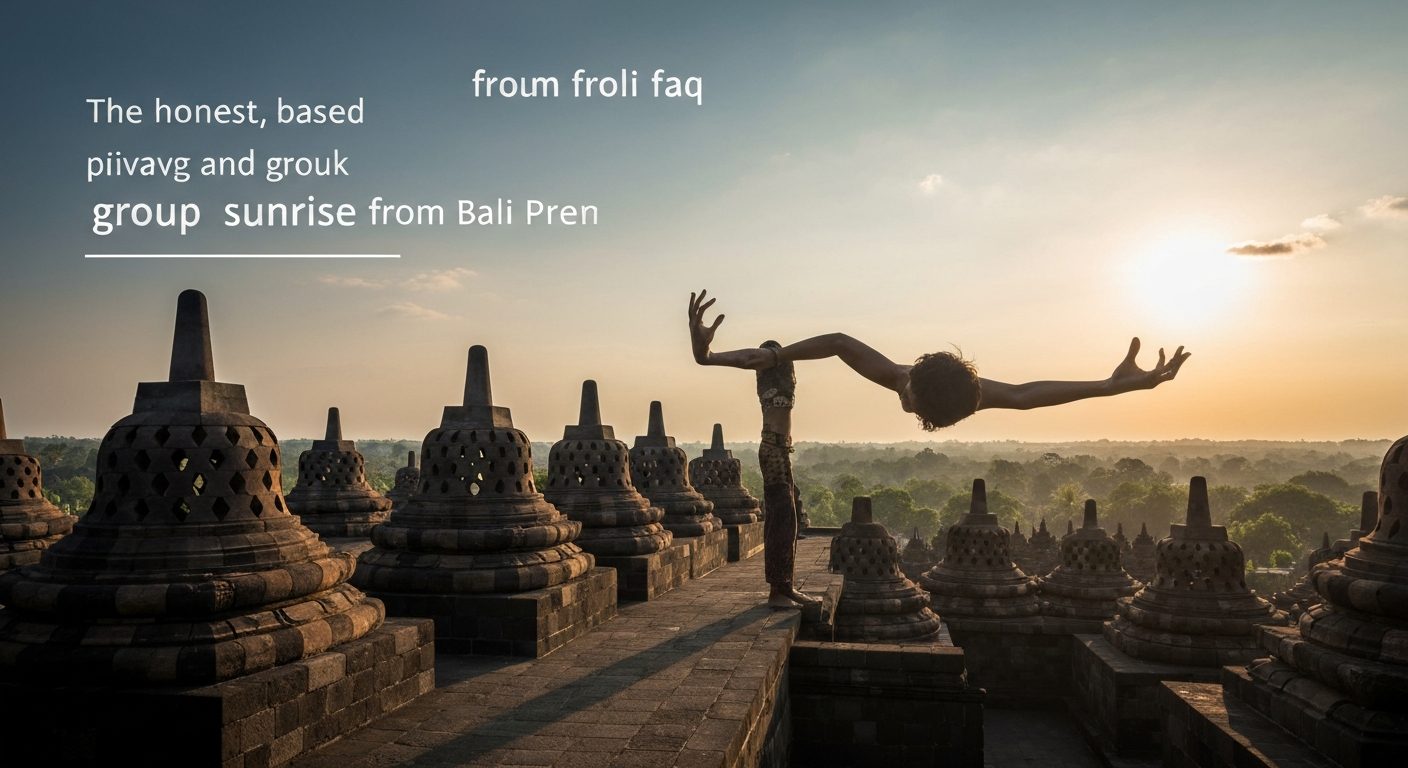
Sunrise from the temple structure is available only through the official Manohara sunrise/early-access program, which is limited and pricier (around IDR 1,000,000 per person, verify current rate). Many tours instead view sunrise from Punthuk Setumbu hill, then enter the temple afterward. Access rules change, so confirm current options when booking. Read more.
What is the Borobudur entrance fee for foreigners in 2026?
The standard foreign-visitor entrance fee is approximately IDR 455,000 (verify current rate), valid for the temple grounds roughly 6:00 AM-5:00 PM. This does NOT include climbing the temple structure, which needs a separate quota-limited climb-up ticket. Children aged 3-10 typically get about 50% off with passport proof; under-3s are usually free. Read more.
What is the difference between the Borobudur climbing ticket and the ground ticket?
The ground (grounds) ticket lets you enter the park and walk around the base of the temple but not climb up. The climb-up ticket is a separate, quota-limited ticket (around 1,200 climbers per day across timed sessions) that includes a guide and mandatory Upanat sandals and permits ascending to the upper terraces. If reaching the top matters, book the climb ticket early. Read more.
Why do you have to wear Upanat sandals at Borobudur?
Upanat are special woven sandals required for anyone climbing the temple structure. They protect the ancient andesite stone reliefs from erosion caused by foot traffic. The sandals are provided with your climb-up ticket. Thin cotton or toe socks are recommended for comfort, as the soles are flat and the stone steps are uneven. Read more.
How many visitors are allowed to climb Borobudur per day?
Climbing the temple structure is capped at roughly 1,200 people per day, divided into about 8 timed sessions of around 150 visitors each (verify current quota). Tickets are sold for fixed time slots and often sell out in peak months, so reserve your climb-up ticket several days in advance through your operator. Read more.
What is the dress code for Borobudur temple?
Wear modest clothing covering knees and shoulders: long trousers, knee-length or longer skirts/shorts, and sleeves or a scarf over the shoulders. Short shorts and mini-skirts are not allowed and staff check before activating your ticket. Light or white colours photograph well against the dark stone. Closed-toe shoes are best for the climb. Read more.
What is the best time of year to visit Borobudur?
The dry season from late April to early October offers the clearest skies and best sunrise views, with May, June and September especially recommended. Mornings are cool and sunrise sessions often run even in rainier months because rain usually falls in late-afternoon bursts. Sunrise itself ranges from about 5:10 AM to nearly 6:00 AM by season. Read more.
What time is sunrise at Borobudur?
Sunrise at Borobudur falls roughly between 5:10 AM and 5:50 AM, shifting later toward 6:00 AM around June to September. Sunrise tours typically start very early, around 3:30-4:00 AM, to reach the temple or Punthuk Setumbu viewpoint before first light. Confirm exact times with your guide for your travel dates. Read more.
Can you visit Borobudur and Prambanan in one day?
Yes. Borobudur (about 42 km northwest of Yogyakarta) and Prambanan (about 17 km east) sit in opposite directions, so with private transport and an early 7:00-7:30 AM start you can spend 2-3 hours at each. A common plan is Borobudur in the morning, lunch, then Prambanan in the afternoon. Note Prambanan’s inner courtyard access may be limited on Mondays. Read more.
How far is Borobudur from Prambanan?
Borobudur and Prambanan are roughly 45 km apart and lie on opposite sides of Yogyakarta. Borobudur is about a 60-90 minute drive northwest of central Yogyakarta, while Prambanan is only 17 km east, about 30-40 minutes. A private car makes seeing both in one day comfortable; public transport between them takes 3-4 hours with transfers. Read more.
How far is Borobudur from Yogyakarta?
Borobudur is about 42 km northwest of Yogyakarta city, a 60-90 minute drive depending on morning traffic. From Yogyakarta International Airport (YIA) it is roughly 1-1.5 hours. Most Borobudur tours, including those from Bali, route through Yogyakarta because it is the nearest major city and airport. Read more.
Is Borobudur worth visiting?
Yes. Borobudur is the world’s largest Buddhist temple and a UNESCO World Heritage Site, widely described by travelers as a once-in-a-lifetime experience for its scale, carved reliefs and Kedu Valley setting. A rushed midday day trip can feel underwhelming; visiting at sunrise or with an overnight stay near the temple gives the best experience. Read more.
How many days do you need to visit Borobudur from Bali?
Plan a minimum of two days from Bali: one for travel and one for the temple, ideally with an overnight stay near Borobudur or in Yogyakarta so you can catch sunrise. A single-day round trip is possible but tight, leaving only a few midday hours at the temple. Two days also lets you add Prambanan or Merapi. Read more.
Should you watch Borobudur sunrise from the temple or Punthuk Setumbu hill?
Punthuk Setumbu hill gives a panoramic view of Borobudur silhouetted in mist with Mount Merapi behind, and costs only around IDR 50,000. The temple sunrise via Manohara is more intimate and costlier but can be crowded. On very misty mornings the hill view of the temple can be obscured, while temple-level mist photographs beautifully. Many tours combine both. Read more.
How difficult is the climb up Borobudur?
The climb involves roughly 100+ steps up steep but well-maintained stone staircases to the upper terraces. Most reasonably fit visitors manage it, though it requires some exertion and the provided Upanat sandals have thin soles. Allow extra time and rest if you have knee, heart or mobility concerns. Going at sunrise avoids midday heat. Read more.
Can elderly, disabled, or pregnant travelers visit Borobudur?
Yes, the park grounds and base of the temple are accessible and worth visiting even without climbing, and the ground ticket allows this. Climbing the upper terraces involves steep steps and is not ideal for those with serious mobility, heart or pregnancy concerns. This is general information, not medical advice; consult your doctor about your fitness to climb. Read more.
Is a private Borobudur tour better than a group tour?
A private Borobudur tour gives you a flexible schedule, your own guide and vehicle, and an earlier start for sunrise, which suits families, photographers and first-timers. Group tours are cheaper but follow a fixed pace and shared timing. From Bali, where logistics involve flights and transfers, private tours are popular for the added control and comfort. Read more.
How much does a Borobudur tour from Bali cost?
Cost depends on flights, whether it is a private or group tour, overnight stays, and which tickets (ground vs climb-up vs sunrise) are included. Round-trip Bali-Yogyakarta flights and the foreign entrance fee (around IDR 455,000) are the main fixed costs; private tours and sunrise/climb access add more. Contact Bali Premium Trip for a current tailored quote. Read more.
What should you bring for a Borobudur sunrise tour?
Bring a light warm layer (pre-dawn terraces can be 18-22C), a flashlight or phone torch, comfortable closed-toe shoes, thin socks for the Upanat sandals, water, sunscreen, a hat and a camera. For daytime visits add sunglasses and avoid dark clothing, which gets hot on the open stone terraces. Modest, knee-and-shoulder-covering clothing is required. Read more.
What is the best Borobudur photography spot for sunrise?
Punthuk Setumbu hill is the classic sunrise photography spot, capturing Borobudur in morning mist with Mount Merapi behind. From inside the temple, the upper stupa terraces frame the bell-shaped stupas against the sunrise. Nearby Mendut and Pawon temples and the rice fields around the site offer additional compositions. A misty morning produces the most dramatic images. Read more.
How long do you need at Borobudur temple?
Plan about 2-3 hours to properly explore Borobudur, walking the galleries, reading the reliefs and reaching the upper terraces. A rushed visit of under 2 hours, common on tight day trips, feels skimpy. Sunrise visits often combine 1-2 hours at the temple with a hill viewpoint and nearby Mendut and Pawon temples. Read more.
Where is Borobudur located?
Borobudur is in Magelang Regency, Central Java, Indonesia, about 42 km northwest of Yogyakarta city and roughly 1-1.5 hours by road from Yogyakarta International Airport. It sits in the fertile Kedu Valley, surrounded by the Menoreh hills and volcanoes including Mount Merapi. From Bali, access is via a flight to Yogyakarta. Read more.
How old is Borobudur and who built it?
Borobudur was built in the 8th-9th century (around 750-850 CE) under the Sailendra dynasty during Central Java’s Buddhist era. It is the world’s largest Buddhist temple, later abandoned and rediscovered in the 19th century, then restored. It was designated a UNESCO World Heritage Site in 1991. Verify specific dates against UNESCO sources for academic use. Read more.
Borobudur vs Prambanan: which should you visit?
Borobudur is a single massive Buddhist monument famous for sunrise and carved reliefs; Prambanan is a soaring Hindu temple complex of tall spires. If you can only pick one, Borobudur is the more iconic choice, but many travelers visit both in a day since they are about 45 km apart near Yogyakarta. Prambanan inner access may be limited on Mondays. Read more.
Do you need to book Borobudur tickets in advance?
Yes, especially the climb-up and sunrise tickets, which have strict daily quotas and fixed time slots that sell out in peak months. Booking 3-7 days ahead is recommended for the climb, and 1-2 weeks ahead for flights from Bali. A tour operator can secure the timed climb slot and coordinate transfers for you. Read more.
Can you combine Borobudur with the Merapi volcano tour?
Yes. A popular full-day combination pairs a Borobudur sunrise with a Mount Merapi jeep lava tour, since both lie near Yogyakarta. Typically you do Borobudur or Punthuk Setumbu at sunrise, then transfer to the Merapi area for the off-road jeep experience. A private tour makes the timing and transfers between sites smooth. Read more.
What are the Borobudur reliefs and what do they show?
Borobudur is decorated with around 2,672 relief panels and 504 Buddha statues across its galleries. The carvings depict Buddhist teachings and the soul’s journey from the world of desire through form to formlessness as you ascend the levels, culminating in the bell-shaped stupas at the top. A guide helps you read the narrative sequence. Read more.
What is the weather like at Borobudur?
Borobudur has a tropical climate with a dry season (roughly late April-early October) of clear mornings and a wet season (November-March) of late-afternoon downpours, often after sunny mornings. Pre-dawn temperatures on the terraces can drop to 18-22C, while midday is hot and humid. Sunrise tours frequently run even in rainier months. Read more.
What is Vesak at Borobudur?
Vesak (Waisak) is the annual Buddhist celebration of the Buddha’s birth, enlightenment and death, held at Borobudur and nearby Mendut temple around the May full moon. It features monk processions and a lantern release, drawing large crowds and pilgrims. Dates shift yearly with the lunar calendar, so verify the exact date and any access restrictions before planning a visit. Read more.
Can you visit nearby villages and culture around Borobudur?
Yes. The Borobudur area includes Candirejo village for rural life and andong (horse-cart) rides, the nearby Mendut and Pawon temples that align with Borobudur, and local batik and craft experiences. These add cultural depth beyond the main monument and pair well with a sunrise visit. A private guide can build them into your itinerary. Read more.
Is there a budget option for a Borobudur tour from Bali?
Yes. Costs drop if you fly on lower-fare flights, join a shared group tour rather than private, choose the ground ticket instead of the pricier sunrise package, and skip overnight luxury stays. Booking flights and tickets 1-2 weeks ahead also helps. Bali Premium Trip can tailor a value-focused Borobudur itinerary on request. Read more.
Who operates Borobudur Tour From Bali and how do you book?
This Borobudur Tour From Bali service is operated by Bali Premium Trip, a Bali-based luxury travel concierge founded in 2015. It plans and sells private, guided Borobudur tours run with its own Bali team plus licensed, vetted local guides and operators on the ground. Book directly via WhatsApp 6281128590000 or sales@balipremiumtrip.com. Read more.
Is Borobudur suitable for families with kids?
Yes. Families visit Borobudur regularly; children aged 3-10 typically receive about 50% off the entrance fee with passport proof of age, and under-3s are usually free. The grounds are stroller-friendlier than the steep upper climb. An early sunrise start avoids midday heat, and a private tour lets you set a child-friendly pace. Read more.