The Borobudur climb difficulty is a common question for visitors planning their trip to this magnificent temple. While a visit to Borobudur Temple requires some physical effort, particularly if you wish to ascend to the upper terraces, it is generally manageable for the average traveler with a moderate fitness level. It’s important to understand the specific challenges, such as the number and steepness of the steps, and the current access regulations.
Borobudur Temple is not located at an elevation that poses a risk for altitude sickness; the site itself sits gently at approximately 265 meters (870 feet) above sea level. This is comparable to many coastal towns and is far below the threshold where altitude sickness typically becomes a concern. The primary physical demand comes from navigating the structure’s ancient stone steps.
Understanding the Borobudur Temple Climb Difficulty and Safety
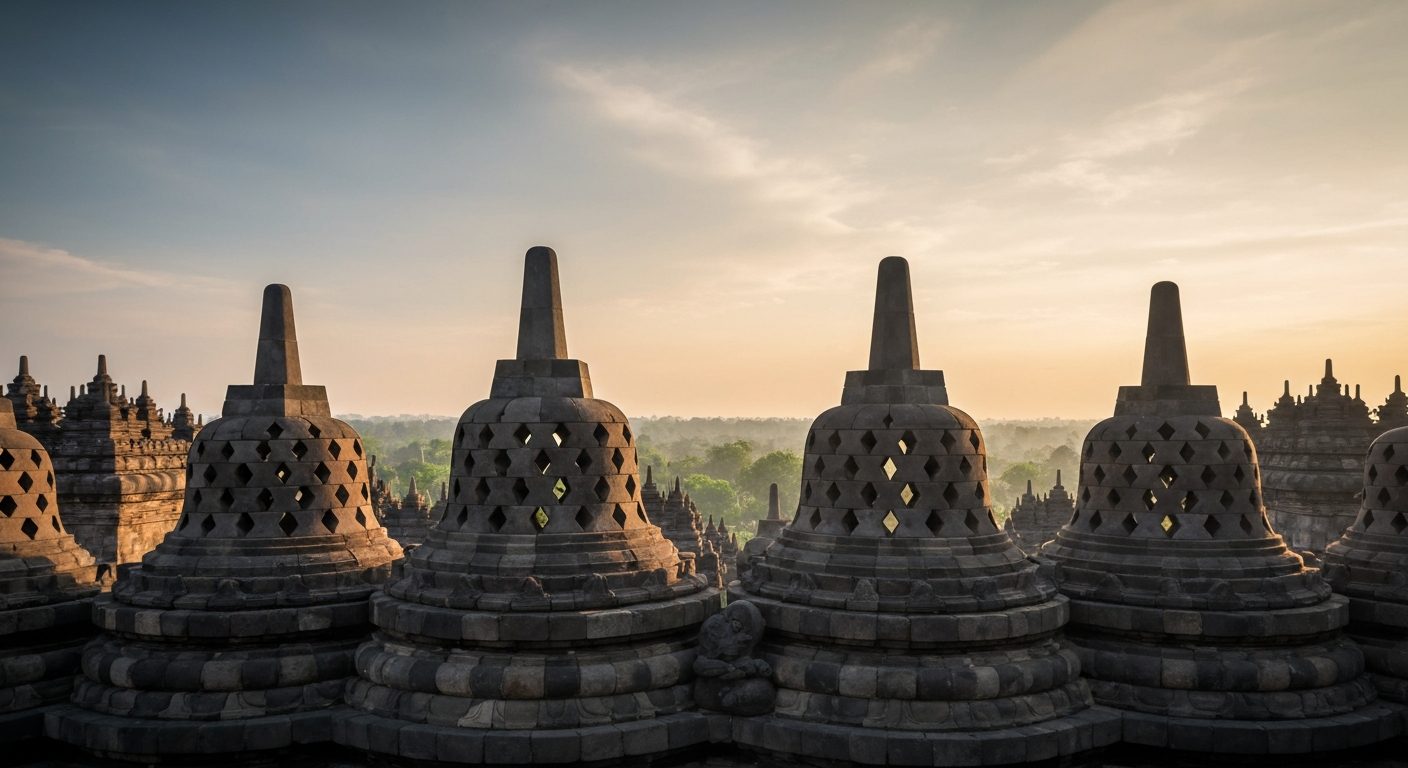
Borobudur is a monumental structure, a 9th-century Mahayana Buddhist temple built by the Sailendra dynasty. Its design reflects the path to enlightenment, ascending through six square terraces (Rupadhatu) and three circular platforms (Arupadhatu), culminating in a large central stupa. Each level is adorned with intricate reliefs and Dhyani Buddha statues within perforated stupas.
The physical journey mirrors this spiritual one. Visitors traditionally circumnavigate each square terrace before ascending to the next. The main challenge for most visitors is the sheer number of steps and their design. They are made of volcanic stone, often uneven, and can be quite steep, particularly as you approach the upper levels.
How Many Steps to Climb Borobudur?
There isn’t a single, universally agreed-upon number for “how many steps to climb Borobudur,” as it depends on where you start counting and how you choose to ascend. If you consider the direct path from the base of the temple structure to the very top platform, you will navigate over 400 steps. These steps are divided across the temple’s ten levels.
Each level requires ascent, and while the lower terraces have wider, less steep steps, the higher you go, the narrower and steeper they become. The steps leading to the circular platforms and the central stupa are noticeably more challenging.
Borobudur Temple Stairs Fitness Requirement: What to Expect
The Borobudur temple stairs fitness requirement is primarily for leg strength and balance. You will be walking up and down many steps, often without handrails. The stone can be slippery, especially after rain, and worn smooth in places from centuries of foot traffic.
A good general fitness level, where you can comfortably walk up several flights of stairs without significant discomfort, is usually sufficient. Regular walking or light hiking will prepare you well. If you have concerns about your knees, ankles, or balance, taking it slow is crucial.
- Approximate Elevation of Borobudur Site
- ~265 meters (870 feet) above sea level.
- Total Height of Temple Structure
- ~34.5 meters (113 feet) from base to central stupa.
- Estimated Steps from Base to Top Platform
- Over 400 steps, varying in steepness and width.
- Typical Ascent Duration (Guided Tour)
- 1-1.5 hours for the ascent and exploration of upper levels, depending on group pace.
- Footwear Requirement for Upper Levels
- Special traditional sandals (sendal upanat) provided at the site, or sturdy, closed-toe shoes on lower levels.
Current Access Regulations: Post-Restoration Guided Visits
Since 2022, access to the upper nine terraces of Borobudur (the Rupadhatu and Arupadhatu sections) has been significantly regulated to protect the monument’s delicate structure and carvings. This impacts the borobudur climbing difficulty level in terms of pace and supervision. Visitors are now required to join a guided group tour to ascend to these upper levels. This policy helps manage visitor flow and ensures respectful interaction with the sacred site.
- Limited Numbers: Only a certain number of visitors are allowed on the upper terraces at any given time.
- Mandatory Guides: You must be accompanied by a licensed guide provided by the temple management.
- Special Footwear: To prevent further wear and tear on the ancient stones, visitors climbing to the upper levels are required to wear special traditional sandals (known as sendal upanat) provided at the site. These are designed to be softer on the stone.
- Timed Access: Entry to the upper levels is usually timed, meaning you’ll have a specific window to complete your ascent and exploration.
This structured approach means the pace of your ascent will be set by the guide and group. While this ensures safety and preservation, it also means you might not be able to rush or linger as much as you wish. Our tours, operated by Bali Premium Trip with our licensed on-ground guides, are designed to work seamlessly within these regulations, ensuring you have the best possible experience while adhering to temple rules.
Borobudur Tour Physical Fitness Level Required for Different Travelers
The physical demands of climbing Borobudur vary depending on individual fitness, age, and any pre-existing conditions. Most people find the climb manageable, but preparation and awareness are key.
Borobudur Climb for Elderly and Kids
For older travelers and children, the borobudur climb for elderly and kids can be a slower but still rewarding experience. Many senior visitors successfully reach the top. The key is to take your time, pause often, and not feel pressured to keep up with faster groups. Families with young children (under 5-6 years old) might find the steep steps and lack of handrails challenging for little ones. Carrying toddlers in carriers is possible but adds to the physical exertion.
- Seniors: Pace yourself. Use walking sticks if they aid your balance (ensure they have rubber tips to protect the stone). Consider visiting during cooler parts of the day (early morning or late afternoon). Our guides are adept at accommodating varying paces.
- Children: Supervise closely on steps. Encourage breaks. Point out interesting reliefs to keep them engaged. Remember that the upper levels require the special sandals, which might be new for some children.
For those with limited mobility, it is possible to experience Borobudur without climbing to the very top. The lower terraces, accessible via ramps and wider pathways, still offer incredible views of the temple’s architecture and reliefs. Our Bali Premium Trip team can arrange a slower-paced or terrace-only itinerary if required, ensuring everyone can appreciate this UNESCO World Heritage site.
Can I Climb Borobudur if Afraid of Heights?
If you ask, “Can I climb Borobudur if afraid of heights?”, the answer is often yes, with some preparation and awareness. While Borobudur is a tall structure, it doesn’t have open, sheer drops like some mountain paths. The ascent is gradual, and the terraces are wide. The walls of the temple often provide a sense of enclosure, particularly on the lower levels. As you ascend, the views open up, but you are always surrounded by the structure itself.
- Focus on the Details: Concentrate on the intricate reliefs and Buddha statues on each level rather than looking down or out.
- Stay Close to the Walls: Walk closer to the inner walls of the terraces if the open views make you uneasy.
- Take Breaks: Pause to rest and re-center yourself whenever needed.
- Communicate: Let your guide know about your concern. They can offer reassurance and ensure you have enough time.
Many visitors with mild acrophobia successfully navigate the temple. For severe cases, consider limiting your ascent to the lower, wider terraces, which still offer a profound experience of the temple’s art and history without the full height exposure.
Practical Tips for a Comfortable and Safe Borobudur Climb
To make your borobudur temple climb difficulty and safety experience as smooth as possible, consider these practical tips:
- Hydration is Key: Bring plenty of water. Even without significant altitude, climbing stairs in tropical heat can lead to dehydration.
- Dress Code: Wear modest clothing that covers shoulders and knees. This is respectful for a sacred site. Sarongs are often provided or available for rent at the entrance if your attire is deemed insufficient.
- Footwear: While special sandals are provided for the upper levels, wear comfortable, sturdy, closed-toe shoes for the approach to the temple and the lower levels. These will provide better grip and support.
- Sun Protection: The sun can be intense. Wear a hat, sunglasses, and apply sunscreen.
- Timing Your Visit: Early morning (for sunrise tours) or late afternoon are generally cooler and offer softer light for photography. Sunrise tours, while popular, mean an early start and can be crowded.
- Pace Yourself: Do not feel compelled to rush. Enjoy the journey, the views, and the intricate details of the reliefs.
- Listen to Your Body: If you feel dizzy, overly tired, or experience any discomfort, take a break. There are areas to sit on the lower terraces.
- Follow Guide Instructions: Always adhere to the guidance of your licensed Borobudur guide. They are there for your safety and to enhance your understanding of the temple.
Regarding any potential borobudur altitude sickness risk, as mentioned, at approximately 265 meters above sea level, Borobudur is at a very low elevation. There is no significant risk of altitude sickness for visitors. The primary physical challenge remains the stairs and the tropical climate.
Planning Your Borobudur Tour: What Bali Premium Trip Arranges
Borobudur Tour From Bali, operated by Bali Premium Trip, specializes in making your journey to this ancient wonder seamless and enriching. We understand the nuances of visiting Borobudur, from the historical significance to the practical logistics of the climb.
When you plan your trip with us, you are booking directly with our Bali Premium Trip reservations team. We offer transparent, published rates with no third-party markup. Our comprehensive tour packages typically include:
- Round-trip flights from Bali to Yogyakarta.
- Accommodation in Yogyakarta or near Borobudur.
- Private, air-conditioned ground transportation.
- Licensed, English-speaking on-ground guides who are experts on Borobudur’s history, reliefs, and etiquette.
- Entrance fees to Borobudur and other sites like Mendut and Candirejo temples.
- Guidance on current temple regulations, including footwear and timed access.
While we operate your tour directly, we arrange third-party services such as flights, specific park jeeps (for sunrise experiences from Punthuk Setumbu, for example), and the temple’s own licensed guides for the upper climb, via our trusted local partners. This ensures you benefit from local expertise and adherence to all regulations.
Indicative Tour Pricing
To give you an idea of costs, an indicative price range for a 2-day/1-night Borobudur tour from Bali, including flights, accommodation, ground transport, licensed guide, and entrance fees, is typically around US$450-800 per person. This range can vary based on factors like flight class, hotel choice, and specific itinerary inclusions. (Prices last verified June 2026 and are subject to change.)
Our standard guided temple climb groups are typically kept to a manageable size, often 10-15 people, allowing for personalized attention and a comfortable pace.
Your journey to Borobudur is more than just a climb; it’s an exploration of history, art, and spirituality. We are here to ensure your experience is as fulfilling and comfortable as possible, addressing all aspects of the borobudur climbing temple difficulty age limit and other concerns, so you can focus on the wonder of the temple itself.
If you have specific concerns about mobility, health, or simply prefer a more leisurely pace, please plan your trip with us. We can customize itineraries to suit your needs, including arranging a slower-paced tour or focusing on the accessible lower terraces. Our team is available via WhatsApp for convenient planning and support.
Frequently Asked Questions About Borobudur Climb Difficulty
Is Borobudur hard to climb for seniors?
Borobudur can be challenging for some seniors due to the steep, uneven steps and lack of handrails. However, many seniors successfully climb to the top by taking it slow, resting frequently, and utilizing a guide. It’s advisable for seniors with heart, mobility, or balance conditions to consult their doctor before climbing. We can arrange slower-paced or terrace-only itineraries.
Do you need to be very fit to climb Borobudur?
You don’t need to be an athlete, but a moderate level of physical fitness is beneficial. The climb involves navigating over 400 steps that can be steep and uneven. If you can comfortably walk up several flights of stairs, you should manage the Borobudur climb. Hydration and appropriate footwear are also important.
Are there age limits for climbing Borobudur Temple?
There is no official borobudur climbing temple difficulty age limit set by the temple management. However, for practical safety, very young children (toddlers who cannot walk independently or those who tire quickly) and individuals with significant mobility impairments might find the upper levels challenging. Our guides can help assess suitability on the day and offer alternative viewing options.
What footwear is required for the Borobudur climb?
For climbing to the upper nine terraces, visitors are currently required to wear special traditional sandals (sendal upanat) provided by the temple management to protect the ancient stones. For the lower levels and surrounding grounds, comfortable, sturdy closed-toe shoes with good grip are recommended.
Is Borobudur accessible for wheelchair users?
Access to the very top of Borobudur Temple is not wheelchair accessible due to the numerous steep stairs. However, the expansive grounds and the base of the temple, including the lower terraces, are largely accessible. Visitors using wheelchairs can still get a powerful sense of the monument and its surroundings. Our team can help plan an itinerary that maximizes accessibility.
Ready to experience the grandeur of Borobudur? Let us help you plan your trip, ensuring a comfortable and memorable visit tailored to your needs. Connect with us on WhatsApp for personalized assistance.